
Somewhere in every cell, a quiet chemical conversation is happening: thousands of small molecules rising, falling, and reacting in response to disease, stress, drugs, or diet. Metabolomics is the science of listening in on that conversation. It’s become one of the most powerful tools in life sciences, helping researchers understand disease mechanisms, track how drugs move through the body, and discover the biomarkers that could power tomorrow’s diagnostics.
But here’s the catch: as metabolomics has grown from a niche specialty into a mainstay of pharmaceutical, biotech, academic, and clinical research, the instrumentation needed to do it well hasn’t gotten any cheaper. The good news? Building a lab capable of producing publication-quality data doesn’t require buying the shiniest new instrument on the market. It requires choosing the right tools for the job, and being smart about how you acquire them.
Step One: Get the Separation Right
Before any molecule can be identified, it has to be untangled from the biological soup it came from: blood, urine, tissue extracts, cell culture media, all packed with thousands of overlapping compounds. That’s the job of liquid chromatography, which separates a complex sample into its individual components before the real analysis begins.
Faster, higher-resolution platforms exist and can be worth the investment for labs pushing throughput limits. But plenty of established chromatography systems still deliver excellent separation and reproducibility for targeted work. The right choice comes down to your sample volume, your pressure requirements, and the specific methods you’re running, not simply which system is newest.
Step Two: Let Mass Spectrometry Do the Heavy Lifting
If chromatography is the sorting stage, mass spectrometry is where the real detective work happens, identifying and measuring metabolites with a level of sensitivity that borders on the remarkable.
Among the various mass spec configurations, triple quadrupole instruments have earned a reputation as the workhorse of targeted metabolomics. They’re prized for consistent, quantitative accuracy and dependable reproducibility, which is why they show up so often in pharmaceutical development, clinical labs, food safety testing, toxicology, and environmental monitoring.
High-resolution instruments have their place too, particularly for untargeted discovery work where researchers are hunting for unknown metabolites rather than confirming known ones. But for the routine, quantitative workflows that make up the bulk of daily lab work, a well-chosen triple quad setup often hits the sweet spot between performance and cost.
Don’t Underestimate Sample Prep
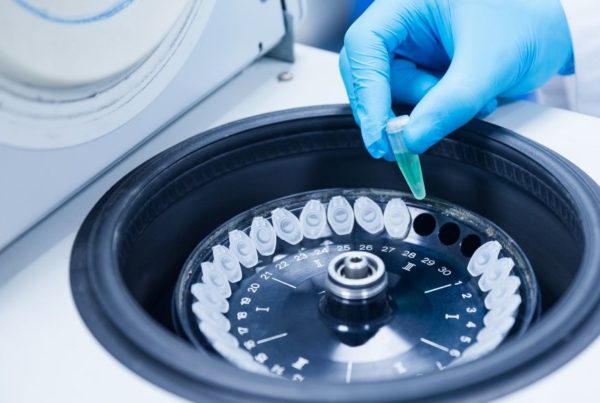
It’s easy to focus all your attention and budget on the big analytical instruments and forget about what happens before a sample ever reaches them. Centrifuges, filtration systems, vortex mixers, and solvent evaporators may not be glamorous, but they’re where data quality is won or lost. A messy, inconsistent prep protocol will undermine even the best-instrumented lab downstream. Investing time in clean, standardized sample handling pays dividends in every result that follows.
Think Beyond the Purchase Order
Buying the right instrument is only half the story. The other half is keeping it running well for years. Before committing to any system, it’s worth asking:
- Is service support readily available?
- Are replacement parts easy to source?
- Does the software stay compatible with your data pipeline?
- Is there a preventive maintenance plan?
Labs that plan for the full lifecycle of an instrument, not just the day it arrives, tend to see far less downtime and far more consistent results over the long haul.
Stretching Your Budget Further
Here’s a fact that surprises a lot of first-time lab builders: professionally refurbished analytical instrumentation can provide dependable performance for many research and routine analytical applications while significantly reducing acquisition costs.. That’s not a compromise. It’s simply a smarter way to allocate research funding, freeing up capital for reagents, staffing, or the next big project instead of tying it all up in a single purchase order.
The key is working with a supplier who genuinely inspects, tests, and verifies every system before it goes out the door. That diligence is what separates a great refurbished deal from a risky one.
Whether you’re standing up a brand-new metabolomics lab or expanding the one you already have, the winning formula is the same: pick equipment that matches your actual science, don’t overspend on capability you won’t use, and plan for the long term. Conquer Scientific specializes in exactly this: offering a broad selection of tested, refurbished chromatography and mass spectrometry systems, backed by real technical support, parts availability, and service, so your lab can run efficiently without draining its budget on day one.