Peptides have become increasingly important across pharmaceutical research, biotechnology, clinical diagnostics, and life science laboratories. From therapeutic peptide development to biomarker discovery and proteomics research, accurate peptide analysis is essential for ensuring quality, purity, and reliable scientific data. Modern analytical laboratories rely heavily on advanced instrumentation such as HPLC systems, LC-MS systems, and mass spectrometry technologies to support peptide characterization and testing workflows.
What Is Peptide Analysis?
Peptide analysis refers to the identification, characterization, quantification, and purity testing of peptides using analytical laboratory instruments. Because peptides are made of amino acid chains with complex molecular structures, laboratories require highly sensitive and precise analytical techniques to evaluate them properly.
Peptide analysis is commonly used in:
- Pharmaceutical research and development
- Biotech laboratories
- Clinical and diagnostic research
- Proteomics and biomarker studies
- Cannabis and nutraceutical testing
- Academic and government laboratories
As peptide-based therapeutics continue to grow in popularity, laboratories are investing more heavily in analytical instrumentation capable of delivering reproducible and accurate results.
Why HPLC Is Important for Peptide Analysis
High-Performance Liquid Chromatography (HPLC) remains one of the most widely used techniques for peptide separation and purity analysis. HPLC systems help laboratories separate complex peptide mixtures and evaluate impurities, retention times, and compound stability.
Reverse-phase HPLC is especially common in peptide applications because it provides excellent separation efficiency for amino acid chains and synthetic peptides. Laboratories frequently use HPLC systems equipped with UV, DAD, or fluorescence detectors to support routine peptide testing workflows.
Popular HPLC platforms used for peptide analysis include systems from Agilent Technologies, Shimadzu, and Thermo Fisher Scientific.
LC-MS and Mass Spectrometry for Peptide Characterization
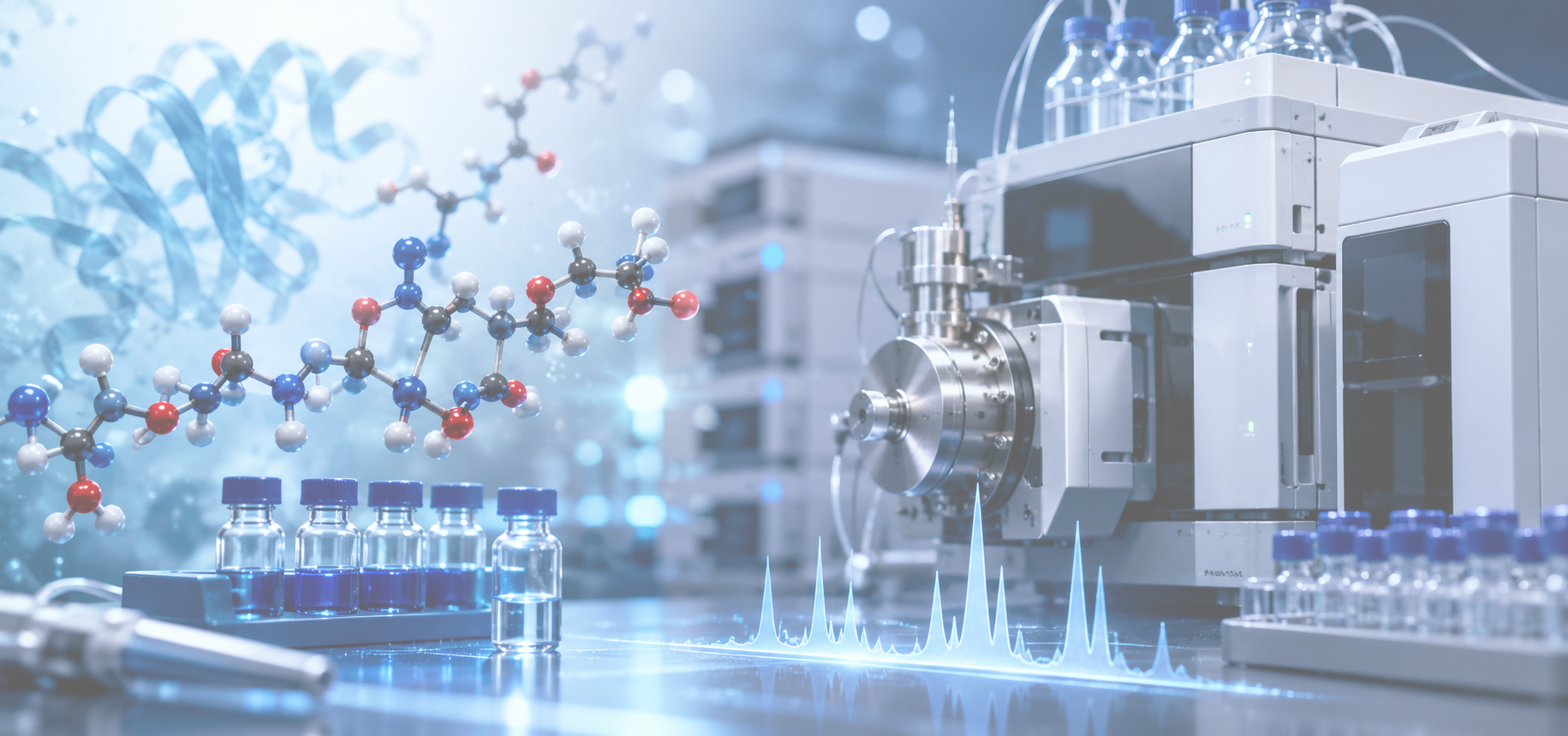
Liquid Chromatography-Mass Spectrometry (LC-MS) combines chromatographic separation with highly sensitive mass detection, making it one of the most powerful tools for peptide characterization.
LC-MS systems allow scientists to:
- Confirm peptide molecular weights
- Identify unknown peptide compounds
- Detect low-level impurities
- Analyze peptide sequences
- Support quantitative bioanalysis workflows
Triple quadrupole LC-MS/MS systems and high-resolution mass spectrometers are commonly used in pharmaceutical and biotech laboratories because they provide excellent sensitivity and reproducibility for peptide applications.
Mass spectrometry technologies are especially valuable when working with complex biological samples where precision and low detection limits are critical.
The Growing Demand for Analytical Instrumentation
As peptide therapeutics and biologics continue expanding within the pharmaceutical industry, the demand for reliable analytical laboratory equipment continues to increase. Laboratories often seek cost-effective solutions that provide high performance without the expense of purchasing brand-new systems.
Refurbished analytical instruments have become a practical option for many laboratories looking to expand peptide analysis capabilities while maintaining budget flexibility. Properly refurbished HPLC, LC-MS, GC-MS, and ion chromatography systems can deliver dependable performance for peptide testing, research, and quality control applications.
At Conquer Scientific, laboratories can find fully refurbished analytical instrumentation from trusted manufacturers including Agilent Technologies, AB Sciex, Thermo Fisher Scientific, and Shimadzu. Every system is thoroughly inspected, tested, and supported to help laboratories perform reliable peptide analysis and other demanding analytical workflows with confidence.